3D Laser Cutting at UFG Gotha: Precision, Speed, and Maximum Design Freedom
3D laser machining has become one of the most advanced and efficient technologies in metalworking in recent years. Companies that want to manufacture complex components quickly, precisely, and economically are increasingly turning to 3D laser technology. UFG Gotha is one of Thuringia’s specialized providers of professional 3D laser cutting for metal, steel, aluminum, stainless steel, copper, brass, and titanium.
This comprehensive guide explains in detail how 3D laser machining works, what benefits it offers, and why it is indispensable for modern manufacturing processes. We also show the difference between 3D laser cutting and 2D laser cutting, so you get clear guidance for your projects.
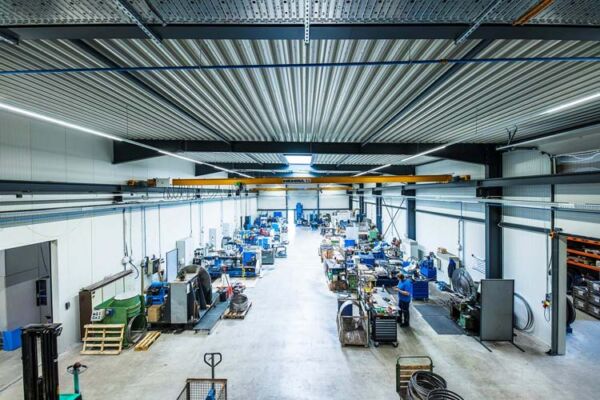

What Is 3D Laser Cutting? – A Clear Explanation
3D laser cutting is a high-precision manufacturing process in which a laser beam operates not only in a plane (X and Y axes) but also in depth and three-dimensional space (Z axis). This makes it possible to machine complex-shaped, curved, or three-dimensionally formed components.
Among other things, this technology can perform the following operations:
- Cutting
- Drilling
- Engraving
- Contouring
- Separating
- Ablation
- Precision machining of free-form surfaces
For industries such as mechanical engineering, vehicle construction, plant engineering, architecture, or medical technology, 3D laser machining is essential today, as it combines accuracy with economic efficiency.
The Difference Between 3D Laser Cutting and 2D Laser Cutting
What Is 2D Laser Cutting?
In 2D laser cutting, the material is processed on a flat plane. The workpiece lies flat on a cutting table. The laser moves exclusively in two dimensions – suitable for sheet metal or flat materials.
Typical Applications of 2D Laser Cutting:
- Contour cuts in sheet metal panels
- Flat components and boards
- Series parts with simple geometry
- Cast parts requiring flat blanks

What Is the Difference Between 3D Laser Cutting and 2D Laser Cutting?
| Feature | 2D Laser Cutting | 3D Laser Cutting |
| Working space | plane only (X/Y) | three-dimensional (X/Y/Z) |
| Suitable workpieces | flat | curved, shaped, spatial |
| Flexibility | medium | very high |
| Complexity | limited | nearly unlimited |
| Typical products | sheet metal parts, boards | tubes, profiles, deep-drawn parts, cast parts, welded assemblies |
| Post-processing | often necessary | frequently not necessary |
In short:
2D laser cutting is ideal for flat materials.
3D laser cutting is suitable for anything complex, spatially shaped, or curved.
UFG Gotha combines both processes to always offer customers the optimal solution.
3D Laser Cutting at UFG Gotha – Our Expertise & Your Added Value
As an industry-experienced provider of metalworking laser processes, we offer precise and economical 3D laser machining for a variety of materials – from steel to titanium.
Which Materials Does UFG Gotha Process with 3D Laser Cutting?
We specialize in:
- Steel
- Stainless steel
- Aluminum
- Copper
- Brass
- Titanium
Each material has different properties – and our team knows exactly how to laser-machine it optimally. Thanks to state-of-the-art machinery, we achieve the highest precision and repeatable results.
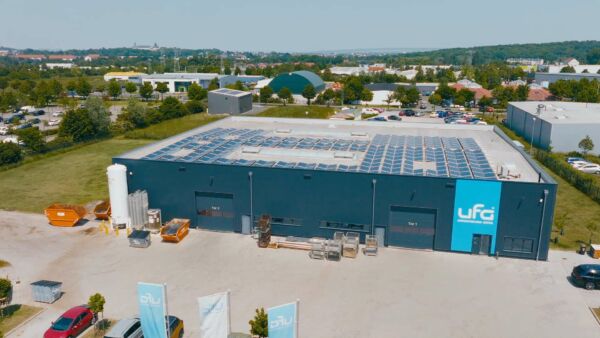
Why 3D Laser Cutting from UFG Gotha? – Your Advantages at a Glance
Highest Precision
The laser enables extremely fine cuts, clean edges, and millimeter-precise contours – even with complex spatial shapes.
Very High Flexibility
From prototypes to series production, any component geometry can be realized.
No or Minimal Post-Processing
The cut edges are smooth and oxide-free. Grinding or milling is often completely unnecessary.
Low Tooling Costs
Since the laser works without contact, expensive mechanical tools are unnecessary.
Fast Turnaround Times
The ideal combination of speed, precision, and automation.
Perfect for Curved or Shaped Components
Where conventional machining reaches its limits, 3D laser cutting plays to its strengths.
High Repeatability
Ideal for series production – every part exactly like the last.
Applications for 3D Laser Cutting
Many industries benefit from 3D laser cutting today – especially when complex shapes or high-precision metals need to be machined.
Mechanical Engineering
- Mounting plates
- Functional components
- Precision components
Automotive & Vehicle Technology
- Tube components
- Structural components
- Brackets
- Crash-relevant components
Metal Construction & Architecture
- Design components
- Custom-made sheets
- Special constructions
Aerospace & Medical Technology
- Titanium components
- Medical instruments
- Complex lightweight components
Plant Engineering
- Piping
- Housings
- Special constructions
The versatility of 3D laser cutting makes it a key technology in modern manufacturing.
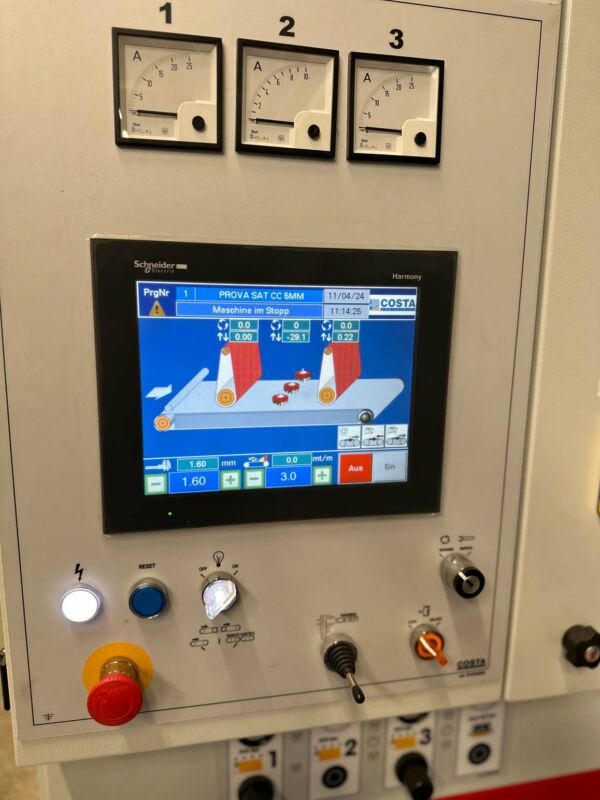

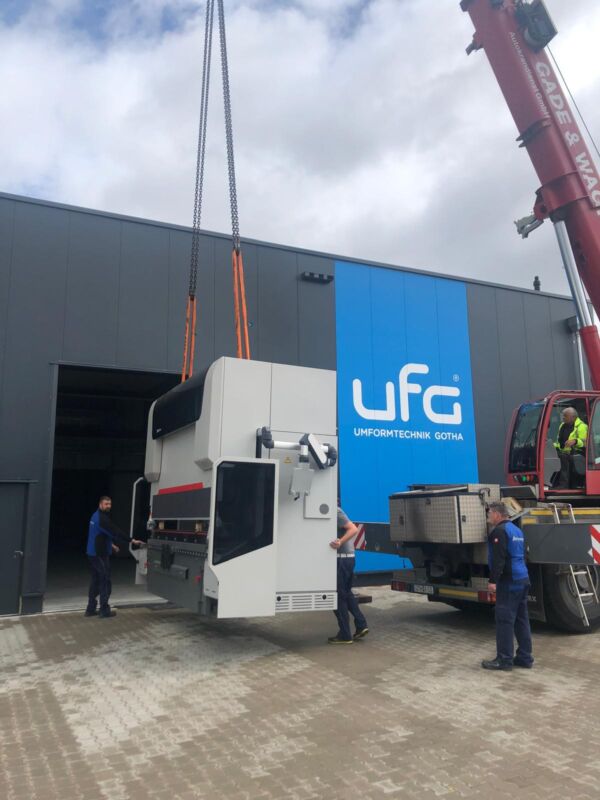
How Does the 3D Laser Cutting Process Work Technically?
To understand how it works, it helps to look at the technical process.
- CAD data & digital preparation
The components are modeled in CAD systems. The geometry serves as the basis for laser programming.
- Positioning the component in 3D space
The workpiece is clamped into a fixture. Through axis systems and rotating/tilting movements, the laser can reach any position in space.
- Laser beam machining
Depending on the application, the laser is used for:
- Cutting
- Drilling
- Ablation
- Contour machining
- Cameras & Sensors Ensure Precision
Modern 3D laser systems work with:
- Height scanning
- Automatic focus control
- Optical sensors
This keeps cutting quality consistently high.
- Component Removal & Quality Control
After cutting, dimensions, surfaces, and tolerances are inspected.
UFG Gotha uses only modern, high-precision laser systems that guarantee consistently high manufacturing quality.
3D Laser Cutting from UFG Gotha – Your Solution for Precise Metalworking
3D laser cutting is the modern, precise, and flexible solution for machining complex metal components. Thanks to its three-dimensional way of working, the process enables cuts and machining operations that would be difficult or costly to achieve with conventional methods.
UFG Gotha stands for reliability, precision, and maximum flexibility – for individual parts, small batches, and large production volumes. Our experience with materials such as steel, aluminum, stainless steel, brass, copper, and titanium makes us a competent partner for industry, trade, and engineering.
Request Your Project Now – We’ll Advise You Personally!
Do you need 3D laser machining for metal, steel, or special materials?
Then send us your drawings or speak directly with our team.
Get in Touch – UFG Gotha Looks Forward to Your Project!


